Leak en français : traduction et définition
Traductions et définitions de mots et expressions en anglais avec Gymglish. Progressez en anglais dès aujourd'hui et testez votre niveau gratuitement.
Testez votre anglais
Test gratuit et sans engagement
4,7 sur App Store, Play Store et Trustpilot.
Plus de 8 000 000 apprenants dans le monde.
Traduction et définition
to leak: fuir, couler
a leak: une fuite (d'eau)
leaked (information): (des informations confidentielles) ébruitées, divulguées
Exemples
- "Just a small leak in the Channel Tunnel, but nothing to worry about."
- "Leaked nudes of former Intern land Delavigne Corp in hot water!"
- "The perfume bottle smashed during transportation and leaked all over the package... and now me!"
- "Hours ago, a partial transcript of the negotiations was leaked online."
- "Congratulations on choosing Slick Brand Solutions to help repair your company's shattered reputation following your truly embarrassing nude photo leak."
- "EXCLUSIVE: Leaked transcript of Miracle Juice negotiations emerge online"
Exercice 1
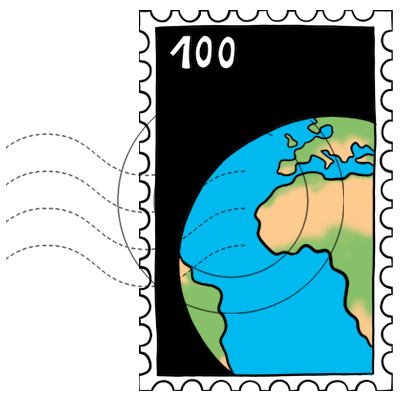
What a nice stamp! Complete the sentences with the correct word.
To attach a stamp to a postcard, we it.
To close a door with a key we it.
If a pipe has a hole and water is coming out, it has a .
To attach a stamp to a postcard, we it.
To close a door with a key we it.
If a pipe has a hole and water is coming out, it has a .
What a nice stamp! Complete the sentences with the correct word.
To attach a stamp to a postcard, we lick 1 it.
To close a door with a key we lock 2 it.
If a pipe has a hole and water is coming out, it has a leak 3.
To attach a stamp to a postcard, we lick 1 it.
To close a door with a key we lock 2 it.
If a pipe has a hole and water is coming out, it has a leak 3.
1 lick: This is correct. "To lick" is to use your tongue to taste (or to make something wet so that it sticks)! Example: I like licking (chocolate) ice cream!
1 lock: This isn't the best choice here. "To lock (a door)" is to secure it with a key. A "lock" is a device used for securing things, usually doors, safes, boxes and windows.
1 leak: This isn't the best choice here. A "leak" is a hole (or crack) through which liquid (or gas), enters or escapes. Example: I think the boat has a leak - we're sinking! Note, "leak" is also used as a verb. Example: Each time it rains, the roof leaks!
2 lock: This is correct. "To lock (a door)" is to secure it with a key. A "lock" is a device used for securing things, usually doors, safes, boxes and windows.
2 lick: This is incorrect. You can try "licking" a door with your tongue, but I'm not sure it would keep the burglars (or house robbers) out!
2 leak: Oops! This doesn't work here! A "leak" is a hole (or crack) through which liquid (or gas), enters or escapes. Example: I think the boat has a leak - we're sinking! Note, "leak" is also used as a verb. Example: Each time it rains, the roof leaks!
3 leak: This is correct. A "leak" is a hole (or crack) through which liquid (or gas), enters or escapes. Example: I think the boat has a leak - we're sinking! Note, "leak" is also used as a verb. Example: Each time it rains, the roof leaks!
3 lock: Sorry, this is incorrect! "To lock (a door)" is to secure it with a key. A "lock" is a device used for securing things, usually doors, safes, boxes and windows.
3 lick: Sorry, this is incorrect! "To lick" is to use your tongue to taste (or to make something wet so that it sticks)! Example: I like licking (chocolate) ice cream!
Exercice 2
Complete the sentences using terms from the dialogue! (each blank requires one word)
The pair of parallel rails on which a train runs are called (railway) .
The sea between England and France is called the English .
An unwanted hole in a pipe that lets water escape is called a .
The pair of parallel rails on which a train runs are called (railway) .
The sea between England and France is called the English .
An unwanted hole in a pipe that lets water escape is called a .
Complete the sentences using terms from the dialogue! (each blank requires one word)
The pair of parallel rails on which a train runs are called (railway) tracks 1.
The sea between England and France is called the English channel 2.
An unwanted hole in a pipe that lets water escape is called a leak 3.
The pair of parallel rails on which a train runs are called (railway) tracks 1.
The sea between England and France is called the English channel 2.
An unwanted hole in a pipe that lets water escape is called a leak 3.
1 tracks: "Tracks" are the "rails" on which trains move from one point to another. In the first announcement, the London to Paris train is delayed due to "water on the tracks". This means water is covering the path of the train. Another example: Don't go on to the tracks - you'll get an electric shock!
2 channel: The English Channel is the sea that separates England from northern France. The Channel Tunnel runs beneath "the Channel" transporting trains. Fun fact: The Channel is very shallow, none of the sea is deep enough to completely submerge Saint Paul's Cathedral!
3 leak: A "leak" is an unintended hole (or crack) through which liquid (or gas), enters or escapes. Example: I think the boat has a leak - we're sinking! In the dialogue, water has entered the Channel Tunnel due to a "small leak". Note, "leak" is also used as a verb. Example: Each time it rains, the roof leaks!
Exercice 3
Complete the sentences using terms from the dialogue! (each blank requires one word)
The pair of parallel rails on which a train runs are called (railway) .
The sea between England and France is called the English .
An unintended crack or hole that allows water or gas to escape is called a .
The pair of parallel rails on which a train runs are called (railway) .
The sea between England and France is called the English .
An unintended crack or hole that allows water or gas to escape is called a .
Complete the sentences using terms from the dialogue! (each blank requires one word)
The pair of parallel rails on which a train runs are called (railway) tracks 1.
The sea between England and France is called the English channel 2.
An unintended crack or hole that allows water or gas to escape is called a leak 3.
The pair of parallel rails on which a train runs are called (railway) tracks 1.
The sea between England and France is called the English channel 2.
An unintended crack or hole that allows water or gas to escape is called a leak 3.
1 tracks: "Tracks" are the "rails" on which trains move from one point to another. In the first announcement, the London to Paris train is delayed due to "water on the tracks". This means water is covering the path of the train. Another example: Don't go onto the tracks - you'll get an electric shock!
2 channel: The English Channel is the sea that separates England from northern France. The Channel Tunnel runs beneath "the Channel" transporting trains. Fun fact: The Channel is very shallow, none of the sea is deep enough to completely submerge Saint Paul's Cathedral!
3 leak: A "leak" is an unintended hole (or crack) through which liquid (or gas), enters or escapes. Example: I think the boat has a leak - we're sinking! In the dialogue, water has entered the Channel Tunnel due to a "small leak". Note, "leak" is also used as a verb. Example: Each time it rains, the roof leaks!
Exercice 4
What a nice stamp! Complete the sentences with the correct word.
To attach a stamp to a postcard, we it.
To close a door with a key we it.
If a pipe has a hole and water is coming out, it has a .
To attach a stamp to a postcard, we it.
To close a door with a key we it.
If a pipe has a hole and water is coming out, it has a .
What a nice stamp! Complete the sentences with the correct word.
To attach a stamp to a postcard, we lick 1 it.
To close a door with a key we lock 2 it.
If a pipe has a hole and water is coming out, it has a leak 3.
To attach a stamp to a postcard, we lick 1 it.
To close a door with a key we lock 2 it.
If a pipe has a hole and water is coming out, it has a leak 3.
1 lick: This is correct. "To lick" is to use your tongue to taste (or to make something wet so that it sticks)! Example: I like licking (chocolate) ice cream!
1 lock: This isn't the best choice here. "To lock (a door)" is to secure it with a key. A "lock" is a device used for securing things, usually doors, safes, boxes and windows.
1 leak: This isn't the best choice here. A "leak" is a hole (or crack) through which liquid (or gas), enters or escapes. Example: I think the boat has a leak - we're sinking! Note, "leak" is also used as a verb. Example: Each time it rains, the roof leaks!
2 lock: This is correct. "To lock (a door)" is to secure it with a key. A "lock" is a device used for securing things, usually doors, safes, boxes and windows.
2 lick: This is incorrect. You can try "licking" a door with your tongue, but I'm not sure it would keep the burglars (or house robbers) out!
2 leak: Oops! This doesn't work here! A "leak" is a hole (or crack) through which liquid (or gas), enters or escapes. Example: I think the boat has a leak - we're sinking! Note, "leak" is also used as a verb. Example: Each time it rains, the roof leaks!
3 leak: This is correct. A "leak" is a hole (or crack) through which liquid (or gas), enters or escapes. Example: I think the boat has a leak - we're sinking! Note, "leak" is also used as a verb. Example: Each time it rains, the roof leaks!
3 lock: Sorry, this is incorrect! "To lock (a door)" is to secure it with a key. A "lock" is a device used for securing things, usually doors, safes, boxes and windows.
3 lick: Sorry, this is incorrect! "To lick" is to use your tongue to taste (or to make something wet so that it sticks)! Example: I like licking (chocolate) ice cream!
Pour ne plus oublier la traduction en français de 'Leak' et progresser en anglais à l'écrit comme à l'oral, découvrez nos cours d'anglais en ligne Gymglish !
Ils parlent de nous :
Evaluez votre niveau d'anglais gratuitement avec Gymglish, cours d'anglais en ligne.
Testez votre anglais