Traduzione inglese <> italiano di Lock
Vocabolario inglese e traduzioni (tutto il vocabolario inglese) Vuoi migliorare il tuo inglese? Prova il nostro corso di inglese online.
TESTA IL TUO LIVELLO DI INGLESE
Prova gratuita e senza impegno
4,7 su App Store, Play Store e Trustpilot
Più di 8 milioni di utenti in tutto il mondo.
Traduzione e definizione
a lock: una serratura, un lucchetto
There's no lock to the bathroom. Anyone can open the door easily so you don't need a key. Il bagno non ha serratura. Chiunque può aprire la porta facilmente, quindi non hai / non avete bisogno di una chiave.
lock-jaw il tetano
to pick the lock aprire la serratura con la forza senza una chiave
under lock and key rinchiuso in un luogo dal quale non si può scappare
Da non confondere con "a lock of hair" (una ciocca di capelli)
to lock (up): chiudere a chiave
Did you remember to lock the door before leaving? Ti sei ricordato/a di chiudere la porta a chiave prima di uscire?
to lock up imprigionare, mettere in prigione; chiudere a chiave tutti gli accessi di un edificio
Esempi
- "The woman, she has locked us in here!"
- "We've had to lock the door to his hut, I'm afraid."
- "I'm talking about more than just locking your door at night."
- "She has locked us in here!"
- "Also, if someone could please fix the lock on the men's room stall, that would be helpful."
- "Maybe this will teach you to lock your door!"
- "Why is this door locked?"
- "12.51PM - Bob Carter enters room and locks door."
- "I locked it."
Esercizio 1
Choose the statement from the list which best summarizes Kevin's email.
Choose the statement from the list which best summarizes Kevin's email.
This is not a good choice. The bike Kevin is writing about does not belong to him. It is a bike he has found outside the office building. Kevin never suggests that he is selling his bike. The bike he is referring to is an old abandoned bike on the street.
Kevin is not writing about "his own bike". The bike he is referring to is one that he has found on the street. He clearly states, "I noticed an old bicycle just outside the main entrance". He never states that the bike belongs to him.
This is not a good choice. Kevin is not writing about a bike he wants to buy. He does write about the cost of a new bicycle, but he is only comparing this cost with the price of replacement parts for the bicycle he wants to take from outside the building.
This is correct. Kevin specifically states that "it's not locked up" which means that the bike is not attached to anything with a lock. This shares a similar meaning with "unsecured".
Esercizio 2
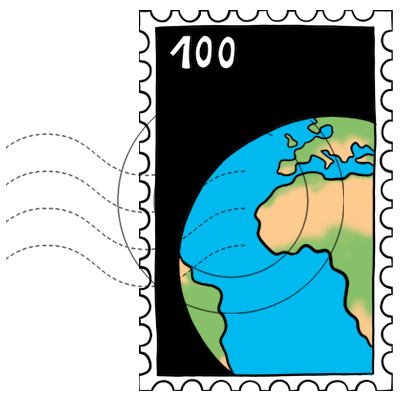
What a nice stamp! Complete the sentences with the correct word.
To attach a stamp to a postcard, we it.
To close a door with a key we it.
If a pipe has a hole and water is coming out, it has a .
To attach a stamp to a postcard, we it.
To close a door with a key we it.
If a pipe has a hole and water is coming out, it has a .
What a nice stamp! Complete the sentences with the correct word.
To attach a stamp to a postcard, we lick 1 it.
To close a door with a key we lock 2 it.
If a pipe has a hole and water is coming out, it has a leak 3.
To attach a stamp to a postcard, we lick 1 it.
To close a door with a key we lock 2 it.
If a pipe has a hole and water is coming out, it has a leak 3.
1 lick: This is correct. "To lick" is to use your tongue to taste (or to make something wet so that it sticks)! Example: I like licking (chocolate) ice cream!
1 lock: This isn't the best choice here. "To lock (a door)" is to secure it with a key. A "lock" is a device used for securing things, usually doors, safes, boxes and windows.
1 leak: This isn't the best choice here. A "leak" is a hole (or crack) through which liquid (or gas), enters or escapes. Example: I think the boat has a leak - we're sinking! Note, "leak" is also used as a verb. Example: Each time it rains, the roof leaks!
2 lock: This is correct. "To lock (a door)" is to secure it with a key. A "lock" is a device used for securing things, usually doors, safes, boxes and windows.
2 lick: This is incorrect. You can try "licking" a door with your tongue, but I'm not sure it would keep the burglars (or house robbers) out!
2 leak: Oops! This doesn't work here! A "leak" is a hole (or crack) through which liquid (or gas), enters or escapes. Example: I think the boat has a leak - we're sinking! Note, "leak" is also used as a verb. Example: Each time it rains, the roof leaks!
3 leak: This is correct. A "leak" is a hole (or crack) through which liquid (or gas), enters or escapes. Example: I think the boat has a leak - we're sinking! Note, "leak" is also used as a verb. Example: Each time it rains, the roof leaks!
3 lock: Sorry, this is incorrect! "To lock (a door)" is to secure it with a key. A "lock" is a device used for securing things, usually doors, safes, boxes and windows.
3 lick: Sorry, this is incorrect! "To lick" is to use your tongue to taste (or to make something wet so that it sticks)! Example: I like licking (chocolate) ice cream!
Esercizio 3
Match each verb to the appropriate term. Each verb is used once.
--> a door
--> a table
--> a phone number
--> a cup of coffee
--> a fire
--> a door
--> a table
--> a phone number
--> a cup of coffee
--> a fire
Match each verb to the appropriate term. Each verb is used once.
to lock 1 --> a door
to wipe 2 --> a table
to dial 3 --> a phone number
to spill 4 --> a cup of coffee
to light 5 --> a fire
to lock 1 --> a door
to wipe 2 --> a table
to dial 3 --> a phone number
to spill 4 --> a cup of coffee
to light 5 --> a fire
1 to lock: This is the correct answer. "To lock (a door)" is to secure it with a key. A "lock" is a device which is opened with a key, for example: I used a lock to secure my bicycle to a road sign.
1 to wipe: "To wipe" is not the appropriate verb to use here. If a door is dirty, it can be wiped with a cloth, but this isn't very common.
1 to dial: "To dial" is not the appropriate verb to use here. "To dial (a phone number)" is to enter the number on a phone, or to make a call.
1 to spill: "To spill" is not the appropriate verb to use here. "To spill (a glass of water)" is to drop or "overturn" the glass, often accidentally.
1 to light: "To light" is not the appropriate verb to use here. "To light (a piece of paper)" is to set fire to it, or to cause it to burn. Although a door can be "lit", it's not very common, unless you are a pyromaniac.
2 to wipe: This is the correct answer. To "wipe (a table)" is to clean it or dry it, usually using a towel or cloth. Note: "to wipe (data)" is to erase or cancel data. For example: The aliens wiped my memory, I don't remember a thing.
2 to dial: "To dial" is not the appropriate verb to use here. "To dial (a phone number)" is to enter the number on a phone, or to make a call.
2 to spill: "To spill" is not the appropriate verb to use here. "To spill (a glass of water)" is to drop or "overturn" the glass, often accidentally.
2 to light: "To light" is not the appropriate verb to use here. "To light (a piece of paper)" is to set fire to it, or to cause it to burn. Although a table can be "lit", it's not very common, unless you are a pyromaniac.
2 to lock: "To lock" is not the appropriate verb to use here. "To lock (a door)" is to secure it with a key. A table might be locked if it has drawers.
3 to dial: This is the correct answer. "To dial (a phone number)" is to enter the number on a phone, or to make a call. The noun "dial" refers to the disk on older telephones which was rotated in order to register the 10 numbers.
3 to spill: "To spill" is not the appropriate verb to use here. "To spill (a glass of water)" is to drop or "overturn" the glass, often accidentally.
3 to light: "To light" is not the appropriate verb to use here. "To light (a piece of paper)" is to set fire to it, or to cause it to burn. Although a phone number can be "lit", it's not very common, unless you are a pyromaniac.
3 to wipe: "To wipe" is not the appropriate verb to use here. To "wipe (a table)" is to clean it or dry it, usually using a towel or cloth.
3 to lock: "To lock" is not the appropriate verb to use here. "To lock (a door)" is to secure it with a key.
4 to spill: This is the correct answer. "To spill (a cup of coffee)" is to drop or overturn the contents, often accidentally. Example: I spilled a glass of red wine on my white dress.
4 to dial: "To dial" is not the appropriate verb to use here. "To dial (a phone number)" is to enter the number on a phone, or to make a call.
4 to light: "To light" is not the appropriate verb to use here. "To light (a piece of paper)" is to set fire to it, or to cause it to burn.
4 to wipe: "To wipe" is not the appropriate verb to use here. To "wipe (a table)" is to clean it or dry it, usually using a towel or cloth. If a cup of coffee is dirty, it can be wiped with a cloth, but this isn't very common.
4 to lock: "To lock" is not the appropriate verb to use here. "To lock (a door)" is to secure it with a key.
5 to light: This is the correct choice. "To light (a fire)" is to ignite a fire, using a match or a lighter. Example: I will go to the church and light a candle for you. Note that "to light" is irregular: light / lit / have lit.
5 to dial: "To dial" is not the appropriate verb to use here. "To dial (a phone number)" is to enter the number on a phone, or to make a call.
5 to spill: "To spill" is not the appropriate verb to use here. "To spill (a glass of water)" is to drop or "overturn" the glass, often accidentally.
5 to wipe: "To wipe" is not the appropriate verb to use here. To "wipe (a table)" is to clean it or dry it, usually using a towel or cloth.
5 to lock: "To lock" is not the appropriate verb to use here. "To lock (a door)" is to secure it with a key.
Esercizio 4
What a nice stamp! Complete the sentences with the correct word.
To attach a stamp to a postcard, we it.
To close a door with a key we it.
If a pipe has a hole and water is coming out, it has a .
To attach a stamp to a postcard, we it.
To close a door with a key we it.
If a pipe has a hole and water is coming out, it has a .
What a nice stamp! Complete the sentences with the correct word.
To attach a stamp to a postcard, we lick 1 it.
To close a door with a key we lock 2 it.
If a pipe has a hole and water is coming out, it has a leak 3.
To attach a stamp to a postcard, we lick 1 it.
To close a door with a key we lock 2 it.
If a pipe has a hole and water is coming out, it has a leak 3.
1 lick: This is correct. "To lick" is to use your tongue to taste (or to make something wet so that it sticks)! Example: I like licking (chocolate) ice cream!
1 lock: This isn't the best choice here. "To lock (a door)" is to secure it with a key. A "lock" is a device used for securing things, usually doors, safes, boxes and windows.
1 leak: This isn't the best choice here. A "leak" is a hole (or crack) through which liquid (or gas), enters or escapes. Example: I think the boat has a leak - we're sinking! Note, "leak" is also used as a verb. Example: Each time it rains, the roof leaks!
2 lock: This is correct. "To lock (a door)" is to secure it with a key. A "lock" is a device used for securing things, usually doors, safes, boxes and windows.
2 lick: This is incorrect. You can try "licking" a door with your tongue, but I'm not sure it would keep the burglars (or house robbers) out!
2 leak: Oops! This doesn't work here! A "leak" is a hole (or crack) through which liquid (or gas), enters or escapes. Example: I think the boat has a leak - we're sinking! Note, "leak" is also used as a verb. Example: Each time it rains, the roof leaks!
3 leak: This is correct. A "leak" is a hole (or crack) through which liquid (or gas), enters or escapes. Example: I think the boat has a leak - we're sinking! Note, "leak" is also used as a verb. Example: Each time it rains, the roof leaks!
3 lock: Sorry, this is incorrect! "To lock (a door)" is to secure it with a key. A "lock" is a device used for securing things, usually doors, safes, boxes and windows.
3 lick: Sorry, this is incorrect! "To lick" is to use your tongue to taste (or to make something wet so that it sticks)! Example: I like licking (chocolate) ice cream!
Esercizio 5
Match each verb to the appropriate term. Each verb is used once.
--> a door
--> a table
--> a phone number
--> a cup of coffee
--> a fire
--> a door
--> a table
--> a phone number
--> a cup of coffee
--> a fire
Match each verb to the appropriate term. Each verb is used once.
to lock 1 --> a door
to wipe 2 --> a table
to dial 3 --> a phone number
to spill 4 --> a cup of coffee
to light 5 --> a fire
to lock 1 --> a door
to wipe 2 --> a table
to dial 3 --> a phone number
to spill 4 --> a cup of coffee
to light 5 --> a fire
1 to lock: This is the correct answer. "To lock (a door)" is to secure it with a key. A "lock" is a device which is opened with a key, for example: I used a lock to secure my bicycle to a road sign.
1 to wipe: "To wipe" is not the appropriate verb to use here. If a door is dirty, it can be wiped with a cloth, but this isn't very common.
1 to dial: "To dial" is not the appropriate verb to use here. "To dial (a phone number)" is to enter the number on a phone, or to make a call.
1 to spill: "To spill" is not the appropriate verb to use here. "To spill (a glass of water)" is to drop or "overturn" the glass, often accidentally.
1 to light: "To light" is not the appropriate verb to use here. "To light (a piece of paper)" is to set fire to it, or to cause it to burn. Although a door can be "lit", it's not very common, unless you are a pyromaniac.
2 to wipe: This is the correct answer. To "wipe (a table)" is to clean it or dry it, usually using a towel or cloth. Note: "to wipe (data)" is to erase or cancel data. For example: The aliens wiped my memory, I don't remember a thing.
2 to dial: "To dial" is not the appropriate verb to use here. "To dial (a phone number)" is to enter the number on a phone, or to make a call.
2 to spill: "To spill" is not the appropriate verb to use here. "To spill (a glass of water)" is to drop or "overturn" the glass, often accidentally.
2 to light: "To light" is not the appropriate verb to use here. "To light (a piece of paper)" is to set fire to it, or to cause it to burn. Although a table can be "lit", it's not very common, unless you are a pyromaniac.
2 to lock: "To lock" is not the appropriate verb to use here. "To lock (a door)" is to secure it with a key. A table might be locked if it has drawers.
3 to dial: This is the correct answer. "To dial (a phone number)" is to enter the number on a phone, or to make a call. The noun "dial" refers to the disk on older telephones which was rotated in order to register the 10 numbers.
3 to spill: "To spill" is not the appropriate verb to use here. "To spill (a glass of water)" is to drop or "overturn" the glass, often accidentally.
3 to light: "To light" is not the appropriate verb to use here. "To light (a piece of paper)" is to set fire to it, or to cause it to burn. Although a phone number can be "lit", it's not very common, unless you are a pyromaniac.
3 to wipe: "To wipe" is not the appropriate verb to use here. To "wipe (a table)" is to clean it or dry it, usually using a towel or cloth.
3 to lock: "To lock" is not the appropriate verb to use here. "To lock (a door)" is to secure it with a key.
4 to spill: This is the correct answer. "To spill (a cup of coffee)" is to drop or overturn the contents, often accidentally. Example: I spilled a glass of red wine on my white dress.
4 to dial: "To dial" is not the appropriate verb to use here. "To dial (a phone number)" is to enter the number on a phone, or to make a call.
4 to light: "To light" is not the appropriate verb to use here. "To light (a piece of paper)" is to set fire to it, or to cause it to burn.
4 to wipe: "To wipe" is not the appropriate verb to use here. To "wipe (a table)" is to clean it or dry it, usually using a towel or cloth. If a cup of coffee is dirty, it can be wiped with a cloth, but this isn't very common.
4 to lock: "To lock" is not the appropriate verb to use here. "To lock (a door)" is to secure it with a key.
5 to light: This is the correct choice. "To light (a fire)" is to ignite a fire, using a match or a lighter. Example: I will go to the church and light a candle for you. Note that "to light" is irregular: light / lit / have lit.
5 to dial: "To dial" is not the appropriate verb to use here. "To dial (a phone number)" is to enter the number on a phone, or to make a call.
5 to spill: "To spill" is not the appropriate verb to use here. "To spill (a glass of water)" is to drop or "overturn" the glass, often accidentally.
5 to wipe: "To wipe" is not the appropriate verb to use here. To "wipe (a table)" is to clean it or dry it, usually using a towel or cloth.
5 to lock: "To lock" is not the appropriate verb to use here. "To lock (a door)" is to secure it with a key.
Hai ancora difficoltà con 'Lock' (vocabolario inglese)? Prova il nostro corso di inglese online e ricevi una valutazione del livello gratuita!
