Lock meaning in English
Learn how to use Lock correctly with Gymglish.
Test and improve your English. Start your free trial today.
TEST YOUR ENGLISH
Free trial and no commitment to buy
4,7 on App Store, Play Store and Trustpilot
More than 8 million learners worldwide
Definition
a lock: a device which is opened with a key, for example in a door
There's no lock to the bathroom. Anyone can open the door easily so you don't need a key.
lock-jaw tetanus
to pick the lock to open the lock with force without a key
under lock and key enclosed in a place from which one cannot escape
Should not be confused with "a lock of hair" (several hairs)
to lock (up): to fasten or close using a key
Did you remember to lock the door before leaving?
to lock up to imprison, to put in prison; to close all the doors and windows of a building using a key
Examples
- "The woman, she has locked us in here!"
- "We've had to lock the door to his hut, I'm afraid."
- "I'm talking about more than just locking your door at night."
- "She has locked us in here!"
- "Also, if someone could please fix the lock on the men's room stall, that would be helpful."
- "Maybe this will teach you to lock your door!"
- "Why is this door locked?"
- "12.51PM - Bob Carter enters room and locks door."
- "I locked it."
Exercise 1
Choose the statement from the list which best summarizes Kevin's email.
Choose the statement from the list which best summarizes Kevin's email.
This is not a good choice. The bike Kevin is writing about does not belong to him. It is a bike he has found outside the office building. Kevin never suggests that he is selling his bike. The bike he is referring to is an old abandoned bike on the street.
Kevin is not writing about "his own bike". The bike he is referring to is one that he has found on the street. He clearly states, "I noticed an old bicycle just outside the main entrance". He never states that the bike belongs to him.
This is not a good choice. Kevin is not writing about a bike he wants to buy. He does write about the cost of a new bicycle, but he is only comparing this cost with the price of replacement parts for the bicycle he wants to take from outside the building.
This is correct. Kevin specifically states that "it's not locked up" which means that the bike is not attached to anything with a lock. This shares a similar meaning with "unsecured".
Exercise 2
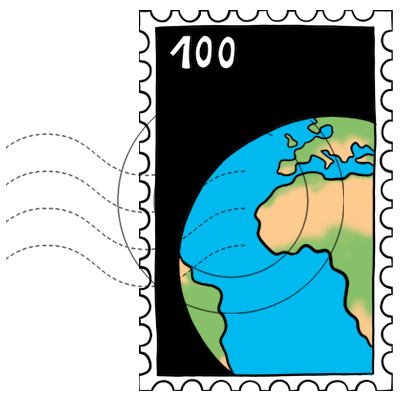
What a nice stamp! Complete the sentences with the correct word.
To attach a stamp to a postcard, we it.
To close a door with a key we it.
If a pipe has a hole and water is coming out, it has a .
To attach a stamp to a postcard, we it.
To close a door with a key we it.
If a pipe has a hole and water is coming out, it has a .
What a nice stamp! Complete the sentences with the correct word.
To attach a stamp to a postcard, we lick 1 it.
To close a door with a key we lock 2 it.
If a pipe has a hole and water is coming out, it has a leak 3.
To attach a stamp to a postcard, we lick 1 it.
To close a door with a key we lock 2 it.
If a pipe has a hole and water is coming out, it has a leak 3.
1 lick: This is correct. "To lick" is to use your tongue to taste (or to make something wet so that it sticks)! Example: I like licking (chocolate) ice cream!
1 lock: This isn't the best choice here. "To lock (a door)" is to secure it with a key. A "lock" is a device used for securing things, usually doors, safes, boxes and windows.
1 leak: This isn't the best choice here. A "leak" is a hole (or crack) through which liquid (or gas), enters or escapes. Example: I think the boat has a leak - we're sinking! Note, "leak" is also used as a verb. Example: Each time it rains, the roof leaks!
2 lock: This is correct. "To lock (a door)" is to secure it with a key. A "lock" is a device used for securing things, usually doors, safes, boxes and windows.
2 lick: This is incorrect. You can try "licking" a door with your tongue, but I'm not sure it would keep the burglars (or house robbers) out!
2 leak: Oops! This doesn't work here! A "leak" is a hole (or crack) through which liquid (or gas), enters or escapes. Example: I think the boat has a leak - we're sinking! Note, "leak" is also used as a verb. Example: Each time it rains, the roof leaks!
3 leak: This is correct. A "leak" is a hole (or crack) through which liquid (or gas), enters or escapes. Example: I think the boat has a leak - we're sinking! Note, "leak" is also used as a verb. Example: Each time it rains, the roof leaks!
3 lock: Sorry, this is incorrect! "To lock (a door)" is to secure it with a key. A "lock" is a device used for securing things, usually doors, safes, boxes and windows.
3 lick: Sorry, this is incorrect! "To lick" is to use your tongue to taste (or to make something wet so that it sticks)! Example: I like licking (chocolate) ice cream!
Exercise 3
Match each verb to the appropriate term. Each verb is used once.
--> a door
--> a table
--> a phone number
--> a cup of coffee
--> a fire
--> a door
--> a table
--> a phone number
--> a cup of coffee
--> a fire
Match each verb to the appropriate term. Each verb is used once.
to lock 1 --> a door
to wipe 2 --> a table
to dial 3 --> a phone number
to spill 4 --> a cup of coffee
to light 5 --> a fire
to lock 1 --> a door
to wipe 2 --> a table
to dial 3 --> a phone number
to spill 4 --> a cup of coffee
to light 5 --> a fire
1 to lock: This is the correct answer. "To lock (a door)" is to secure it with a key. A "lock" is a device which is opened with a key, for example: I used a lock to secure my bicycle to a road sign.
1 to wipe: "To wipe" is not the appropriate verb to use here. If a door is dirty, it can be wiped with a cloth, but this isn't very common.
1 to dial: "To dial" is not the appropriate verb to use here. "To dial (a phone number)" is to enter the number on a phone, or to make a call.
1 to spill: "To spill" is not the appropriate verb to use here. "To spill (a glass of water)" is to drop or "overturn" the glass, often accidentally.
1 to light: "To light" is not the appropriate verb to use here. "To light (a piece of paper)" is to set fire to it, or to cause it to burn. Although a door can be "lit", it's not very common, unless you are a pyromaniac.
2 to wipe: This is the correct answer. To "wipe (a table)" is to clean it or dry it, usually using a towel or cloth. Note: "to wipe (data)" is to erase or cancel data. For example: The aliens wiped my memory, I don't remember a thing.
2 to dial: "To dial" is not the appropriate verb to use here. "To dial (a phone number)" is to enter the number on a phone, or to make a call.
2 to spill: "To spill" is not the appropriate verb to use here. "To spill (a glass of water)" is to drop or "overturn" the glass, often accidentally.
2 to light: "To light" is not the appropriate verb to use here. "To light (a piece of paper)" is to set fire to it, or to cause it to burn. Although a table can be "lit", it's not very common, unless you are a pyromaniac.
2 to lock: "To lock" is not the appropriate verb to use here. "To lock (a door)" is to secure it with a key. A table might be locked if it has drawers.
3 to dial: This is the correct answer. "To dial (a phone number)" is to enter the number on a phone, or to make a call. The noun "dial" refers to the disk on older telephones which was rotated in order to register the 10 numbers.
3 to spill: "To spill" is not the appropriate verb to use here. "To spill (a glass of water)" is to drop or "overturn" the glass, often accidentally.
3 to light: "To light" is not the appropriate verb to use here. "To light (a piece of paper)" is to set fire to it, or to cause it to burn. Although a phone number can be "lit", it's not very common, unless you are a pyromaniac.
3 to wipe: "To wipe" is not the appropriate verb to use here. To "wipe (a table)" is to clean it or dry it, usually using a towel or cloth.
3 to lock: "To lock" is not the appropriate verb to use here. "To lock (a door)" is to secure it with a key.
4 to spill: This is the correct answer. "To spill (a cup of coffee)" is to drop or overturn the contents, often accidentally. Example: I spilled a glass of red wine on my white dress.
4 to dial: "To dial" is not the appropriate verb to use here. "To dial (a phone number)" is to enter the number on a phone, or to make a call.
4 to light: "To light" is not the appropriate verb to use here. "To light (a piece of paper)" is to set fire to it, or to cause it to burn.
4 to wipe: "To wipe" is not the appropriate verb to use here. To "wipe (a table)" is to clean it or dry it, usually using a towel or cloth. If a cup of coffee is dirty, it can be wiped with a cloth, but this isn't very common.
4 to lock: "To lock" is not the appropriate verb to use here. "To lock (a door)" is to secure it with a key.
5 to light: This is the correct choice. "To light (a fire)" is to ignite a fire, using a match or a lighter. Example: I will go to the church and light a candle for you. Note that "to light" is irregular: light / lit / have lit.
5 to dial: "To dial" is not the appropriate verb to use here. "To dial (a phone number)" is to enter the number on a phone, or to make a call.
5 to spill: "To spill" is not the appropriate verb to use here. "To spill (a glass of water)" is to drop or "overturn" the glass, often accidentally.
5 to wipe: "To wipe" is not the appropriate verb to use here. To "wipe (a table)" is to clean it or dry it, usually using a towel or cloth.
5 to lock: "To lock" is not the appropriate verb to use here. "To lock (a door)" is to secure it with a key.
Exercise 4
What a nice stamp! Complete the sentences with the correct word.
To attach a stamp to a postcard, we it.
To close a door with a key we it.
If a pipe has a hole and water is coming out, it has a .
To attach a stamp to a postcard, we it.
To close a door with a key we it.
If a pipe has a hole and water is coming out, it has a .
What a nice stamp! Complete the sentences with the correct word.
To attach a stamp to a postcard, we lick 1 it.
To close a door with a key we lock 2 it.
If a pipe has a hole and water is coming out, it has a leak 3.
To attach a stamp to a postcard, we lick 1 it.
To close a door with a key we lock 2 it.
If a pipe has a hole and water is coming out, it has a leak 3.
1 lick: This is correct. "To lick" is to use your tongue to taste (or to make something wet so that it sticks)! Example: I like licking (chocolate) ice cream!
1 lock: This isn't the best choice here. "To lock (a door)" is to secure it with a key. A "lock" is a device used for securing things, usually doors, safes, boxes and windows.
1 leak: This isn't the best choice here. A "leak" is a hole (or crack) through which liquid (or gas), enters or escapes. Example: I think the boat has a leak - we're sinking! Note, "leak" is also used as a verb. Example: Each time it rains, the roof leaks!
2 lock: This is correct. "To lock (a door)" is to secure it with a key. A "lock" is a device used for securing things, usually doors, safes, boxes and windows.
2 lick: This is incorrect. You can try "licking" a door with your tongue, but I'm not sure it would keep the burglars (or house robbers) out!
2 leak: Oops! This doesn't work here! A "leak" is a hole (or crack) through which liquid (or gas), enters or escapes. Example: I think the boat has a leak - we're sinking! Note, "leak" is also used as a verb. Example: Each time it rains, the roof leaks!
3 leak: This is correct. A "leak" is a hole (or crack) through which liquid (or gas), enters or escapes. Example: I think the boat has a leak - we're sinking! Note, "leak" is also used as a verb. Example: Each time it rains, the roof leaks!
3 lock: Sorry, this is incorrect! "To lock (a door)" is to secure it with a key. A "lock" is a device used for securing things, usually doors, safes, boxes and windows.
3 lick: Sorry, this is incorrect! "To lick" is to use your tongue to taste (or to make something wet so that it sticks)! Example: I like licking (chocolate) ice cream!
Exercise 5
Match each verb to the appropriate term. Each verb is used once.
--> a door
--> a table
--> a phone number
--> a cup of coffee
--> a fire
--> a door
--> a table
--> a phone number
--> a cup of coffee
--> a fire
Match each verb to the appropriate term. Each verb is used once.
to lock 1 --> a door
to wipe 2 --> a table
to dial 3 --> a phone number
to spill 4 --> a cup of coffee
to light 5 --> a fire
to lock 1 --> a door
to wipe 2 --> a table
to dial 3 --> a phone number
to spill 4 --> a cup of coffee
to light 5 --> a fire
1 to lock: This is the correct answer. "To lock (a door)" is to secure it with a key. A "lock" is a device which is opened with a key, for example: I used a lock to secure my bicycle to a road sign.
1 to wipe: "To wipe" is not the appropriate verb to use here. If a door is dirty, it can be wiped with a cloth, but this isn't very common.
1 to dial: "To dial" is not the appropriate verb to use here. "To dial (a phone number)" is to enter the number on a phone, or to make a call.
1 to spill: "To spill" is not the appropriate verb to use here. "To spill (a glass of water)" is to drop or "overturn" the glass, often accidentally.
1 to light: "To light" is not the appropriate verb to use here. "To light (a piece of paper)" is to set fire to it, or to cause it to burn. Although a door can be "lit", it's not very common, unless you are a pyromaniac.
2 to wipe: This is the correct answer. To "wipe (a table)" is to clean it or dry it, usually using a towel or cloth. Note: "to wipe (data)" is to erase or cancel data. For example: The aliens wiped my memory, I don't remember a thing.
2 to dial: "To dial" is not the appropriate verb to use here. "To dial (a phone number)" is to enter the number on a phone, or to make a call.
2 to spill: "To spill" is not the appropriate verb to use here. "To spill (a glass of water)" is to drop or "overturn" the glass, often accidentally.
2 to light: "To light" is not the appropriate verb to use here. "To light (a piece of paper)" is to set fire to it, or to cause it to burn. Although a table can be "lit", it's not very common, unless you are a pyromaniac.
2 to lock: "To lock" is not the appropriate verb to use here. "To lock (a door)" is to secure it with a key. A table might be locked if it has drawers.
3 to dial: This is the correct answer. "To dial (a phone number)" is to enter the number on a phone, or to make a call. The noun "dial" refers to the disk on older telephones which was rotated in order to register the 10 numbers.
3 to spill: "To spill" is not the appropriate verb to use here. "To spill (a glass of water)" is to drop or "overturn" the glass, often accidentally.
3 to light: "To light" is not the appropriate verb to use here. "To light (a piece of paper)" is to set fire to it, or to cause it to burn. Although a phone number can be "lit", it's not very common, unless you are a pyromaniac.
3 to wipe: "To wipe" is not the appropriate verb to use here. To "wipe (a table)" is to clean it or dry it, usually using a towel or cloth.
3 to lock: "To lock" is not the appropriate verb to use here. "To lock (a door)" is to secure it with a key.
4 to spill: This is the correct answer. "To spill (a cup of coffee)" is to drop or overturn the contents, often accidentally. Example: I spilled a glass of red wine on my white dress.
4 to dial: "To dial" is not the appropriate verb to use here. "To dial (a phone number)" is to enter the number on a phone, or to make a call.
4 to light: "To light" is not the appropriate verb to use here. "To light (a piece of paper)" is to set fire to it, or to cause it to burn.
4 to wipe: "To wipe" is not the appropriate verb to use here. To "wipe (a table)" is to clean it or dry it, usually using a towel or cloth. If a cup of coffee is dirty, it can be wiped with a cloth, but this isn't very common.
4 to lock: "To lock" is not the appropriate verb to use here. "To lock (a door)" is to secure it with a key.
5 to light: This is the correct choice. "To light (a fire)" is to ignite a fire, using a match or a lighter. Example: I will go to the church and light a candle for you. Note that "to light" is irregular: light / lit / have lit.
5 to dial: "To dial" is not the appropriate verb to use here. "To dial (a phone number)" is to enter the number on a phone, or to make a call.
5 to spill: "To spill" is not the appropriate verb to use here. "To spill (a glass of water)" is to drop or "overturn" the glass, often accidentally.
5 to wipe: "To wipe" is not the appropriate verb to use here. To "wipe (a table)" is to clean it or dry it, usually using a towel or cloth.
5 to lock: "To lock" is not the appropriate verb to use here. "To lock (a door)" is to secure it with a key.
Still unsure of the best way to use 'Lock'? Improve your English thanks to our online English lessons. We offer a free test as well as a free level assessment!
What our users say:
Test your English with Gymglish today and get a free level assessment
Absolutely free - no strings attached.
